


Views: 0 Author: Site Editor Publish Time: 22-12-2025 Origin: Site


In the packaging industry, a label failure is a brand failure. A label that wrinkles in humidity, fades in sunlight, or peels off a squeezable bottle can destroy consumer trust in seconds.
For label converters and procurement managers, the choice between Paper, BOPP (Polypropylene), and PET (Polyester) is not just about price—it is about physics and chemistry.
While "Paper is cheap" and "Plastic is durable" is the general rule, the technical reality is far more nuanced. What about dyne levels for ink adhesion? What about thermal expansion coefficients? What about the recycling stream compatibility?
As a high-tech material manufacturer, Xinzhu Material goes beyond the basics. In this technical guide, we dissect the three dominant face stocks to help you engineer the perfect label.
(Art Paper / Semi-Gloss / Direct Thermal Paper)
Paper remains the volume leader globally, but its limitations are physical. Being a wood-pulp based fibrous material, it is hygroscopic (absorbs moisture).
Printability (A+): Paper is naturally porous. Inks soak into the fibers, creating a strong mechanical bond. It is the easiest material to print on using Flexo, Offset, or Thermal transfer without expensive top-coatings.
Rigidity vs. Flexibility: Paper has low tensile strength. It snaps easily. However, it has zero "memory" (it doesn't try to snap back to its original shape), making it good for tight corners—until it tears.
The "Soggy" Factor: Without a heavy lamination, paper fibers swell when wet. This causes the label to bubble and gray.
Logistics: Short-life shipping labels (Direct Thermal Paper).
Wine & Spirits: Textured "Estate" papers convey luxury but require "Wet Strength" adhesives to survive the ice bucket.
Dry Retail: Canned goods, boxes.
Manufacturer’s Tip: If you must use paper for a chilled product, ask for a "Semi-Gloss with Aggressive Hot-Melt" combination to fight the condensation.
(Also known as PP Synthetic Paper)
BOPP is not just "plastic." The "BO" stands for Biaxially Oriented.
In our manufacturing process, the Polypropylene film is stretched in two directions (Machine Direction and Transverse Direction).
Stretching the molecular chains aligns them, creating a film that is:
Crystal Clear: The haze is significantly reduced (perfect for the "No-Label Look").
High Tensile Strength: It won't snap on high-speed automatic labeling machines (dispensing speed > 300 bottles/min).
Stiff yet Flexible: This is BOPP's superpower. It is stiff enough to dispense fast, but flexible enough to squeeze.
Water/Oil Resistance: BOPP is non-porous. Water beads off. It is impervious to oils (essential for cosmetics/lotions).
Conformability: BOPP is the #1 choice for Squeezable Tubes (toothpaste, lotion). Unlike PET, it flexes with the bottle and returns to shape without wrinkling.
Temperature: It handles cold well (freezers) but has a lower melting point than PET. It will distort above 80°C-100°C.
Since BOPP is plastic, ink sits on top of it. Without a chemical treatment, the ink will rub off.
The Solution: Top Coated BOPP. At Xinzhu, we apply a chemical top-coating that raises the surface energy (Dyne level), allowing UV and Water-based inks to anchor firmly.
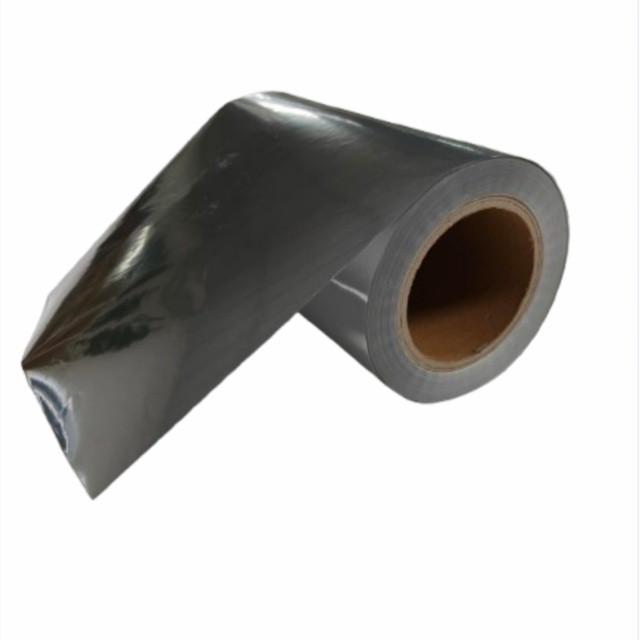
PET is the "Armor Plating" of the label world. It is a denser, harder polymer than PP.
PET is chosen for one primary reason: Survival.
Heat Resistance: PET is stable up to 150°C (300°F) and beyond. It does not shrink or melt easily. This is why it is used for "Under-the-Hood" automotive labels and electronic circuit boards.
Chemical Resistance: It withstands harsh solvents (acetone, brake fluid, cleaners) that would dissolve the printing on a Paper or BOPP label.
Cost: PET raw resin is significantly more expensive.
Rigidity: PET is very stiff. If you put a PET label on a squeezable shampoo bottle, the bottle will flex, but the label won't—resulting in the label popping off (Flagging) or wrinkling permanently.
For the engineers and procurement managers, here is the direct spec comparison:
| Feature | Paper (Coated) | BOPP (PP Synthetic) | PET (Polyester) |
|---|---|---|---|
| Moisture Resistance | Poor (Absorbs) | Excellent (Impervious) | Excellent (Impervious) |
| Temperature Range | -20°C to 80°C | -40°C to 80°C | -40°C to 150°C+ |
| Tensile Strength | Low (Tears) | High (Stretches) | Very High (Untearable) |
| Squeezability | Poor | Excellent | Poor (Too stiff) |
| Outdoor Life (UV) | Weeks (Yellows) | Months (Needs UV lam) | Years (Naturally Stable) |
| Recyclability | Good (with carton) | Excellent (with PP container) | Good (with PET bottle) |
| Relative Cost | 1.0x | 1.5x - 2.0x | 3.0x - 4.0x |
In 2025, brand owners are asking: "Is this label recyclable?"
The answer depends on the container it is stuck to.
PP Container + BOPP Label: The Gold Standard.
Since both the bottle and label are Polypropylene, they can be reground and recycled together without separation. This is a huge trend in the circular economy.
PET Bottle + Paper Label: Problematic.
Paper fibers contaminate the PET recycling wash process.
PET Bottle + BOPP Label: Acceptable.
Modern recycling plants use "Float/Sink" tanks. PP floats, PET sinks, allowing for separation.
Xinzhu Recommendation: Match the label material to the container material (Polyolefin on Polyolefin) for the highest eco-rating.
Sourcing the material is half the battle; printing it is the other half.
Thermal Transfer Printing:
Paper: Uses Wax Ribbons (Cheap).
BOPP/PET: Uses Resin or Wax/Resin Ribbons (Durable). Note: You must use a Top-Coated film for the resin to stick.
Direct Thermal Printing:
Paper is standard.
Direct Thermal BOPP: This is a specialized material Xinzhu manufactures. It combines the water-resistance of BOPP with the ink-free convenience of thermal printing. Ideal for frozen food logistics where paper labels would rot.
Choosing between BOPP, PET, and Paper is a balance of Environment (Heat/Water), Application (Squeeze/Rigid), and Budget.
Use Paper for: Shipping, dry goods, short-term retail.
Use PET for: Electronics, automotive, outdoor assets.
Use BOPP (PP Synthetic) for: Almost everything else. It is the versatile middle-ground that offers premium looks and durability for food, beverage, and personal care.
The Factory Difference:
At Xinzhu Material, we don't just buy jumbo rolls; we coat them.
Whether you need a Top-Coated BOPP for UV printing or an Eco-Friendly PP for a sustainable project, we can customize the face stock thickness, adhesive tack, and release liner to fit your exact converting machinery.
Stop guessing. Start testing.
Get our "Material Discovery Kit" and feel the difference in tensile strength and coating quality yourself.
